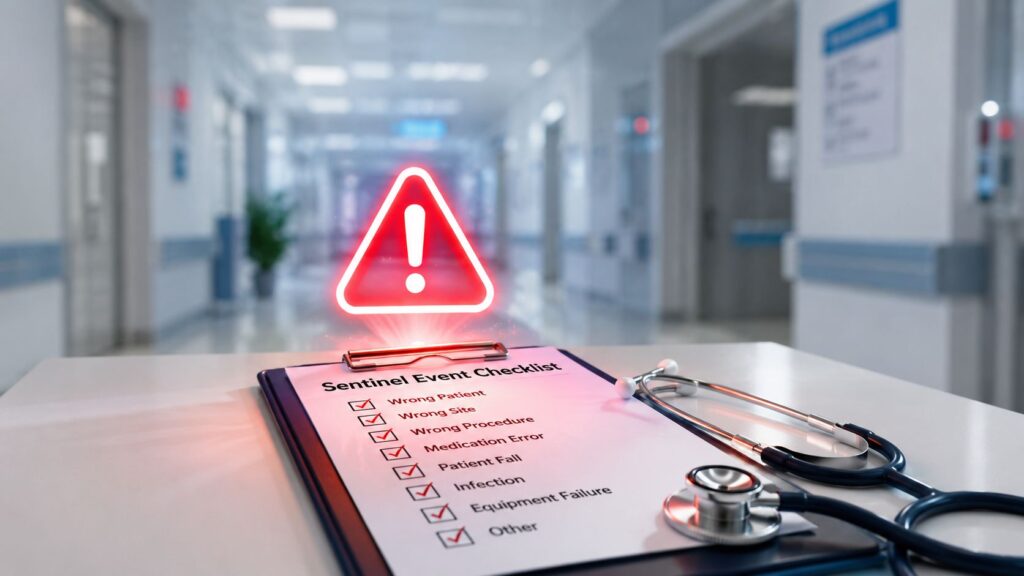
The charge nurse sees the chart first, then the silence in the hallway. A patient who was supposed to recover has suffered an unexpected permanent injury, and the team now has a sentinel event on its hands. In that moment, the pressure is bigger than clinical response alone, because leadership has to protect the patient, answer to regulators, and keep the organization stable while everyone is looking for what failed.

Sentinel events in healthcare are never just a clinical issue. They touch safety, compliance, reputation, and, if documentation or billing workflows are weak, revenue too. The organizations that handle them well move quickly, document clearly, and treat the event as a system failure that needs structured correction, not a blame exercise.
Introduction to Managing Sentinel Events in Healthcare
A sentinel event often arrives like a siren in the middle of an otherwise ordinary shift. One minute a team is handling routine care, the next it is responding to a serious patient safety failure that may involve death, permanent harm, or severe temporary harm. That is why these events call for more than sympathy and a debrief. They require disciplined action across clinical, compliance, and administrative teams.
The first response should be organized, because the early choices shape everything that follows. A clear response protects the patient, preserves documentation, and reduces the chance that the organization will spend extra time and money fixing avoidable gaps in records, coding, billing, or follow-up care. In that sense, patient safety work and revenue-cycle protection start in the same place, with accurate facts and assigned ownership.
For provider groups, the issue is bigger than avoiding a citation. A sentinel event can affect disclosure obligations, survey readiness, malpractice exposure, payer scrutiny, and the cost of rework when records, coding, or follow-up care are incomplete. The organizations that recover fastest usually have one thing in common, they know exactly who owns the response in the first hour, the first day, and the first week.
Practical rule: when a sentinel event is identified, assign one owner for patient safety, one for documentation, and one for operational follow-through. Confusion at that point becomes part of the failure.
The good news is that the response framework is learnable. Once you understand the definition, the deadlines, the root cause analysis process, and how safety findings affect financial risk, the event becomes manageable in a structured way.
Understanding the Key Concepts of Sentinel Events
A sentinel event is a serious patient safety event that results in death, permanent harm, or severe temporary harm. The Joint Commission also sets a high severity threshold for serious injury, which can include loss of limb or function, or other outcomes where another occurrence would create a significant chance of serious adverse harm Minnesota Department of Health summary of Joint Commission definitions. That threshold matters because it draws a line between routine complications and events that point to a breakdown in care delivery.
A simple way to understand it is through a cockpit alert. If an alarm sounds, the crew does not treat it as a minor inconvenience and move on. They check systems, procedures, handoffs, and backup layers. Sentinel events in healthcare call for the same response, because they usually point to a failed system, not a single person who made one mistake.
Why system failures matter more than single errors
The Joint Commission has noted that communication breakdowns, teamwork failures, and inconsistent adherence to policy were leading causes in 2023. That pattern is exactly why a sentinel event response should look beyond the final action that caused harm. The deeper questions are about handoff quality, workflow design, policy clarity, supervision, and whether the environment made an error more likely Joint Commission annual review PDF.
In 2024, patient falls were the single most frequently reported sentinel event category, with 776 reports or 49% of all events, and that category rose 15% from 2023 The Joint Commission sentinel event annual review data. That concentration matters because it shows how a few failure modes keep appearing in serious events. For provider organizations, the lesson reaches beyond clinical safety. Repeated harm also creates rework in documentation, coding, billing, follow-up care, and payer review.
A clean way to distinguish a sentinel event from a less severe adverse event is to ask whether the harm crossed the threshold for immediate organizational learning and formal investigation. If the answer is yes, the event should be treated as a system warning, not a one-time mishap.
A hospital that responds to every sentinel event as if it were isolated will keep seeing the same injuries repeat under different names.
Reporting Requirements and Timelines for Sentinel Events
A sentinel event can feel like a clinical emergency and a compliance deadline at the same time. The organization has to respond on both tracks. The Joint Commission expects organizations to begin a root cause analysis within 72 hours and submit the analysis and action plan within 45 days National Library of Medicine summary of The Joint Commission review. The clock starts quickly, often before the team has fully settled after the event.
The common mistake is waiting until every detail is perfect before taking action. That delay can leave records unsecured, leadership uninformed, and the review process stalled. A better response is to stabilize the patient, preserve documentation, notify the right internal leaders, and start the review while the facts are still fresh. In practice, a sentinel event works like a timed fire drill for the organization, everyone has a role, and hesitation costs time that cannot be recovered.
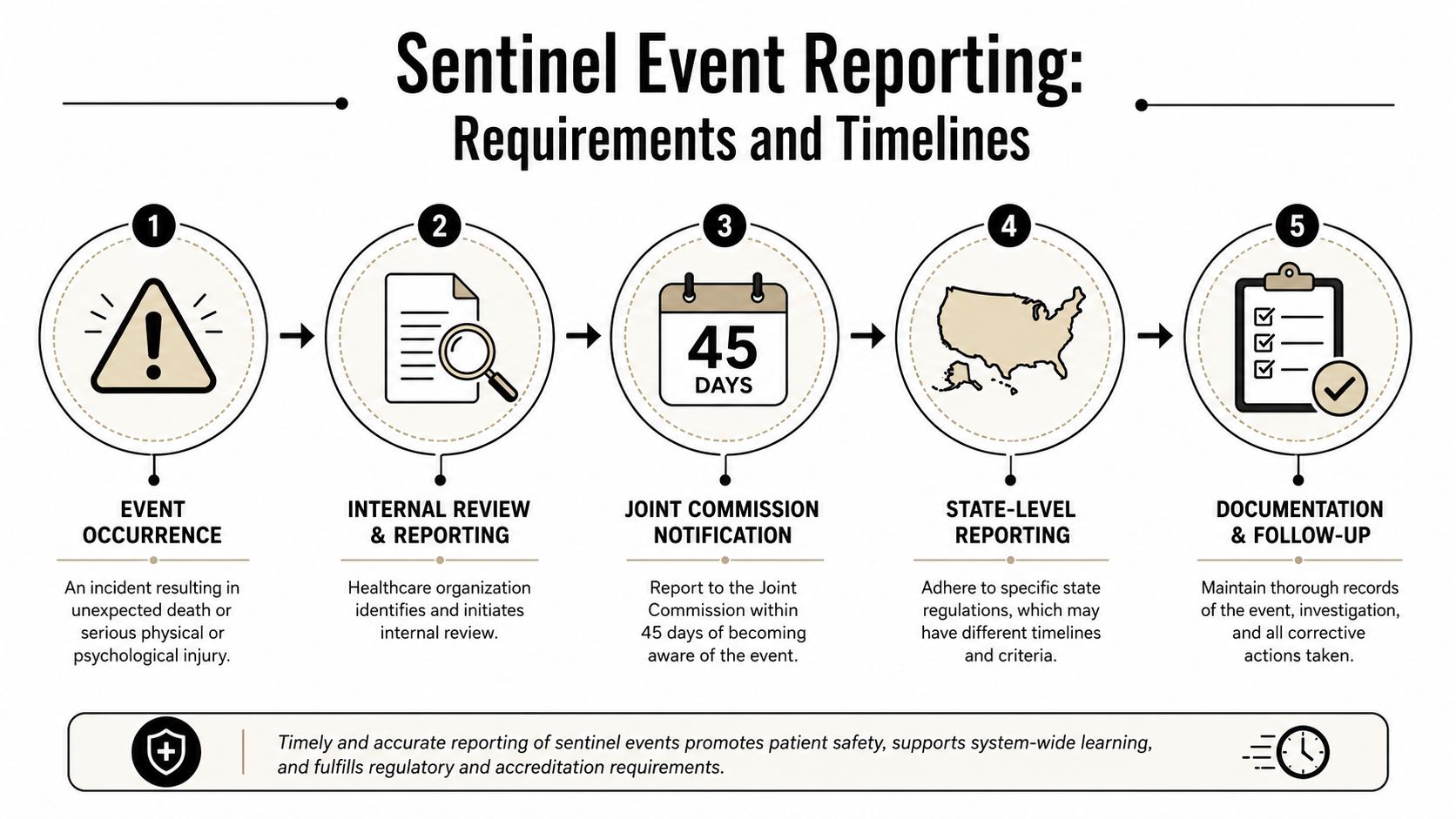
Sentinel Event Reporting Deadlines
| Activity | Deadline | Responsible Party |
|---|---|---|
| Begin root cause analysis | Within 72 hours | Patient safety, quality, and risk leadership |
| Develop analysis and action plan | Within the required review period | Multidisciplinary review team |
| Submit complete analysis and action plan | Within 45 days | Organization leadership or designated reporting owner |
| Preserve documentation and supporting records | Immediately and throughout the review | Clinical, compliance, and medical records teams |
| Track corrective actions after submission | Ongoing | Quality improvement and operational owners |
The table keeps the process visible because roles can blur quickly after a serious event. A clear deadline is only part of the job. The organization also needs a single chain of responsibility so internal review, documentation, and follow-up do not drift into separate workstreams. That matters for patient safety and for the revenue cycle, because incomplete records and delayed corrective action can create downstream billing questions, payer scrutiny, and avoidable rework.
State-level requirements can add another layer, and they may differ from Joint Commission expectations. The safest operating model is to route every serious safety event through one intake point, then let compliance, patient safety, and legal review determine which reporting channels apply. If your organization also wants to tighten documentation quality during this step, a focused clinical documentation improvement process can help keep the record accurate while the event is still under review.
A practical workflow reduces confusion. One person captures the timeline, another secures records, another informs leadership, and another starts the draft narrative. That division of labor keeps the report moving and lowers the chance that everyone assumes someone else filed it.
Conducting Root Cause Analysis and Documentation
A strong root cause analysis is not a story of regret or blame. It is a structured way to see how the system allowed the event to occur and what must change so it does not happen again. The Joint Commission's guidance points teams toward recurring system causes such as communication problems, teamwork breakdowns, and inconsistent policy adherence.
Start by tracing the event from the first warning sign through the final outcome. List each handoff, delay, decision point, and missing safeguard. A timeline does more than organize facts. It shows where the process lost a layer of protection, much like following a trail of open doors to see where the patient was left exposed.
Then use the 5 Whys with discipline. The goal is not to stop at “the nurse missed it” or “the order was not followed.” Keep asking until the team reaches the policy gap, communication gap, workflow design flaw, or training mismatch that made the error easier to repeat. A careful reviewer should be able to see how the event moved through the system, not just who was closest to it.
Document the system, not just the person. If the report reads like a personality critique, it will not support durable change.
A multidisciplinary panel usually works best because sentinel events cross functions. Clinical leaders understand the care path, quality staff understand measurement, risk knows the exposure, and operations can tell you whether the proposed fix is realistic. The documentation should connect each action to a finding, because vague recommendations tend to fade once the meeting ends. For organizations that need help making records clearer while the review is still active, a focused clinical documentation improvement process can support cleaner charting and a stronger RCA file.
Turn findings into usable corrective actions
The Joint Commission expects action plans, not just explanations. That means the team should choose changes that alter the process itself, such as standardizing a handoff step, tightening a verification workflow, or adding a safety checkpoint. Retraining alone is rarely enough if the environment still makes the same error easy to repeat.
For documentation, use plain language and keep the chain of evidence intact. Record who participated, what records were reviewed, what was learned, and how the organization will monitor whether the fix works. Clear documentation matters for more than the quality file. If the chart is incomplete or inconsistent, billing staff may later face questions about what occurred, what was supported, and what the organization can defend if the record is reviewed again.
The best reports read like a map, not a verdict. They show what happened, why it happened, what changed, and how leaders will know the change stuck.
Legal Compliance and Revenue Cycle Implications
Sentinel events create legal exposure because they often trigger disclosure, internal review, and possible external scrutiny. They can also force a review of whether the clinical record supports what was done, what was billed, and what the organization can defend if questions come later. When records are thin or inconsistent, the risk doesn't stay in the safety file, it can spill into claims handling and payer disputes.
That's where revenue cycle teams need to pay attention early. A quality investigation may reveal missing documentation, unsupported services, or inaccurate sequencing that affects billing integrity. If the chart doesn't reflect what happened clearly, staff may struggle to correct claims, respond to payer questions, or explain why a charge should stand.
Why equity data belongs in the same conversation
The Joint Commission now recommends stratifying safety data by the communities served to capture disparities and equity risks, and pairing dashboards with feedback Joint Commission equity guidance. That matters because a serious event is not only a clinical failure, it may also reveal that some patient groups are being harmed more often or more severely than others. If leadership only reviews the incident in isolation, those patterns stay hidden.
A useful compliance lens is to treat the sentinel event record like a business record as well as a safety record. That means clinical notes, incident documentation, payer communications, and corrective action logs should tell the same story. If they don't, the organization may face avoidable denials, recoupment risk, or problems proving that the care delivered was consistent with policy and medical necessity.
The financial lesson is straightforward. Safety failures create labor costs, legal costs, and rework. If teams have to recreate documentation after the fact, clean up coding, or respond to inconsistent records, the event has already become more expensive than it needed to be.
Organizations that manage this well use one shared review path. Clinical leaders, compliance, and billing staff should see the same facts, the same timeline, and the same corrective actions, so the fix helps both patient safety and reimbursement integrity.
medical billing compliance guidance is most useful when it's integrated with safety oversight rather than treated as a separate back-office function.
Step by Step Management and Prevention Checklist
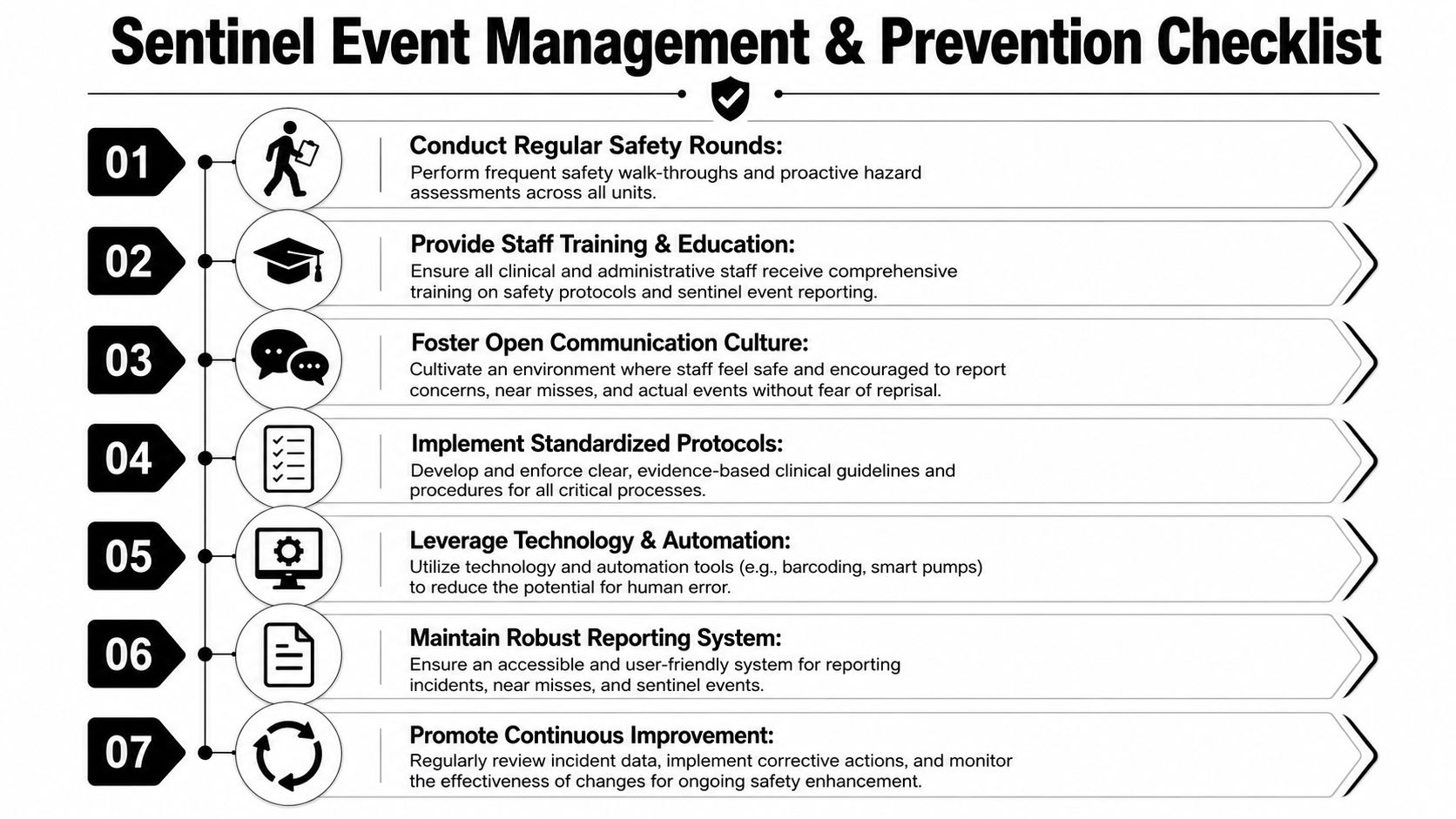
A sentinel event checklist works best when staff can follow it the same way every time, just as they would follow a medication administration protocol or a sterile field setup. It turns a large patient safety problem into a series of clear tasks, and it gives leaders a practical way to train new staff, audit performance, and spot where the system keeps slipping. Regular medical record audits can support that work by showing whether documentation, escalation, and follow-through match the process on paper.
Before the event
Conduct regular safety rounds. Unit leaders should walk the floors, ask direct questions, and look for environmental hazards, workflow confusion, or equipment problems that staff may stop noticing because they see them every day. A rounding habit helps leaders catch weak points before they become harm events.
Provide staff training and education. Training should cover reporting expectations, escalation pathways, and the organization's definition of a sentinel event. Staff need to know what separates a near miss from a serious event that must be reported and reviewed.
Foster open communication culture. If staff are afraid of punishment, they will underreport warning signs. Leaders should reward early escalation and make it normal to speak up when something feels wrong.
Operational insight: near misses are cheaper to learn from than serious harm, but only if people feel safe reporting them.
During and after the event
Implement standardized protocols. High-risk steps need clear, repeatable workflows. That includes verification steps, handoff language, and escalation triggers that do not depend on memory alone.
Utilize technology and automation. Barcoding, smart pumps, alerts, and other safeguards can reduce human variability, but only if the organization monitors override patterns and system performance. Technology works like a guardrail, it helps keep a small error from becoming a larger one.
Maintain an effective reporting system. The reporting tool should be easy to find and easy to use. If staff need a scavenger hunt to file an incident report, the system is already failing.
Promote continuous improvement. After the RCA, assign owners, track completion, and follow up on whether the fix changed behavior. Safety improvements do not matter if no one checks whether they held.
A checklist also helps leaders see where safety and revenue cycle work meet. If documentation is incomplete, the organization may spend extra time reconstructing the story of care, correcting records, or resolving payment questions after the fact. That is why safety review, coding review, and documentation review should move together, not in separate silos.
The most practical version of this checklist is one that has names next to each item. If everyone owns it, no one owns it.
Conclusion and Next Steps
Sentinel event management is really a test of whether an organization can learn under pressure. The safest providers do three things well, they identify system failures quickly, meet reporting deadlines without scrambling, and convert the event into a corrective plan that implements changes in day-to-day work. That's how safety becomes repeatable instead of accidental.
The financial piece matters just as much as the regulatory one. When documentation, billing, and quality teams stay aligned, the organization reduces rework and protects the record that supports both care and reimbursement. That kind of coordination also helps leaders see equity risks more clearly, so the same event doesn't keep hurting the same populations in different ways.
If your organization still treats sentinel events as isolated crises, the next step is to build a cross-functional committee with patient safety, compliance, revenue cycle, and operations at the table. Give that group authority to review trends, track corrective actions, and evaluate whether policy changes are working. The goal isn't only to respond better after harm, it's to make serious harm less likely in the first place.
A CTA for RevGuard.