Monday starts with a familiar escalation. A patient had emergency care, your clinicians did the work, the claim went out clean, and the payer's response still doesn't match the service you delivered. Before the law changed, that


Monday starts with a familiar escalation. A patient had emergency care, your clinicians did the work, the claim went out clean, and the payer's response still doesn't match the service you delivered. Before the law changed, that

You hire a strong clinician. Their schedule fills quickly. Staff starts routing patients, the physicians expect coverage relief, and finance expects revenue to follow. Then billing asks a simple question: is the provider fully credentialed and enrolled

Your practice may be busier than ever and still feel financially weaker than it did a few years ago. Schedules are full. Providers are productive. The phones don't stop. Yet cash arrives late, denials keep stacking up,

A rejected 58100 claim usually doesn't start with a dramatic coding mistake. It starts with something small. The clinician documents abnormal bleeding but doesn't clearly state the indication for biopsy. The procedure note says tissue was obtained,

Monday starts with a denial workqueue that looks manageable. By Wednesday, your team is buried in rejections from multiple payers, each with its own edits, enrollment quirks, and response files. One claim is missing a subscriber detail.
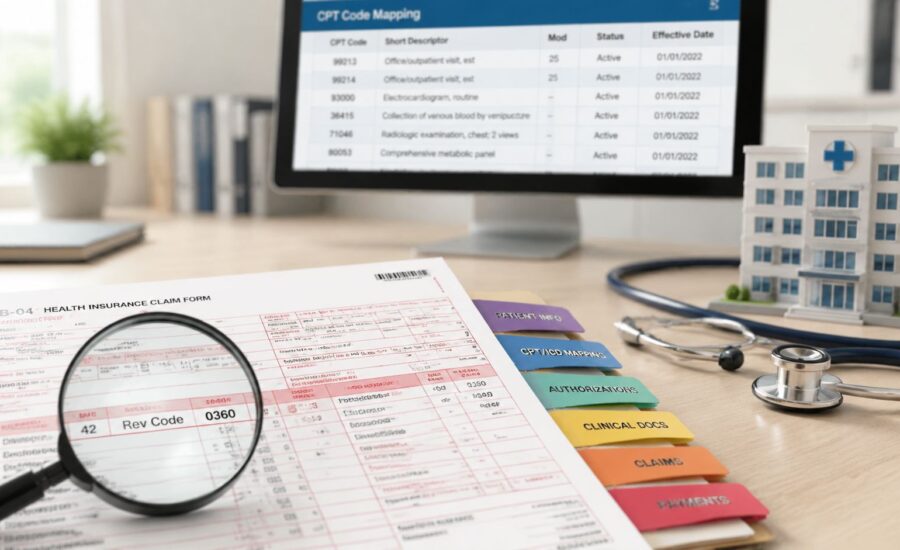
You're probably dealing with one of these situations right now. A clean-looking claim went out. The diagnosis was right. The CPT or HCPCS line looked right. The documentation supported the service. Then the remittance came back denied,

ClinicMind reports that 80% of medical bills contain at least one error, and 30% of insurance claims are denied on first submission. That should change how specialty practices think about medical billing audits. If most bills carry

Your billing team is working denials every morning, your front desk is still chasing eligibility after the visit, and your physicians are asking the same question every month: why are collections lagging when volume hasn't collapsed? That

Claims adjudication cost providers more than $25.7 billion in 2023, and nearly $18 billion of that may have been unnecessary because many disputed claims were ultimately paid after review, according to a major hospital survey reported by

A familiar scene plays out in specialty practices every day. Your team submits a clean claim for a service you perform constantly, the EOB comes back, and the payment is nowhere near the charge or what your

