A BCBS claim lands in your denial queue with a timely filing reason. The ERA doesn't tell the billing lead which Blue affiliate's rule applied, whether the member's product changed the clock, or whether the payer is


A BCBS claim lands in your denial queue with a timely filing reason. The ERA doesn't tell the billing lead which Blue affiliate's rule applied, whether the member's product changed the clock, or whether the payer is

A hospital stay changes the financial equation for patients. In 2022, 50% of people in the United States who had a hospital stay incurred at least $1,000 in out-of-pocket health-care spending, compared with 19% of people who

A facility claim can contain the right diagnosis, a valid CPT or HCPCS code, accurate units, and complete documentation, yet still fail at adjudication. The error may be a single revenue code that places the service in

The No Surprises Act prohibits balance billing for out-of-network emergency services and certain non-emergency services at in-network facilities, with independent dispute resolution available when providers and insurers can't agree on payment. The federal IDR system recorded 2,559,375

Denial management is the closed-loop discipline of preventing, identifying, analyzing, correcting, appealing, and resolving denied or underpaid healthcare claims. In 2023, HealthCare.gov insurers reported an average denial rate of 20% for in-network claims, while out-of-network claims had

Certified IDR entities issued 1,047,575 payment determinations in 2024, compared with 209,346 in 2023, proving that federal independent dispute resolution is now a primary reimbursement channel rather than a niche exception process. Providers should treat IDR as
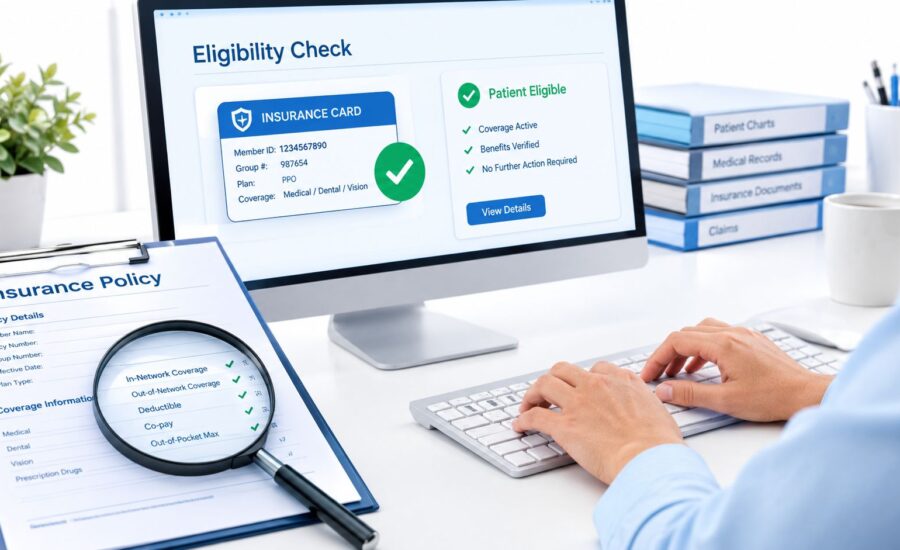
A specialty clinic can do everything right clinically and still lose revenue before the claim reaches the payer. A patient arrives for a planned procedure, the insurance card looks current, and the policy returns as active. Later,

Days in AR equals Accounts Receivable divided by Average Daily Credit Revenue. For example, $1,200,000 in net AR divided by $25,000 in daily revenue produces 48 days. That calculation looks simple on a revenue-cycle report. In practice,

A 15% initial denial rate for commercial inpatient and outpatient claims is already enough to make denial management a finance problem, not a billing cleanup exercise. An analysis of more than 1,800 hospitals and 200,000 physicians found

The most common advice about medical coding errors is to retrain the coder and move on. That advice is incomplete. A coder can follow the guidelines, select a clinically plausible code, and still submit a claim that

